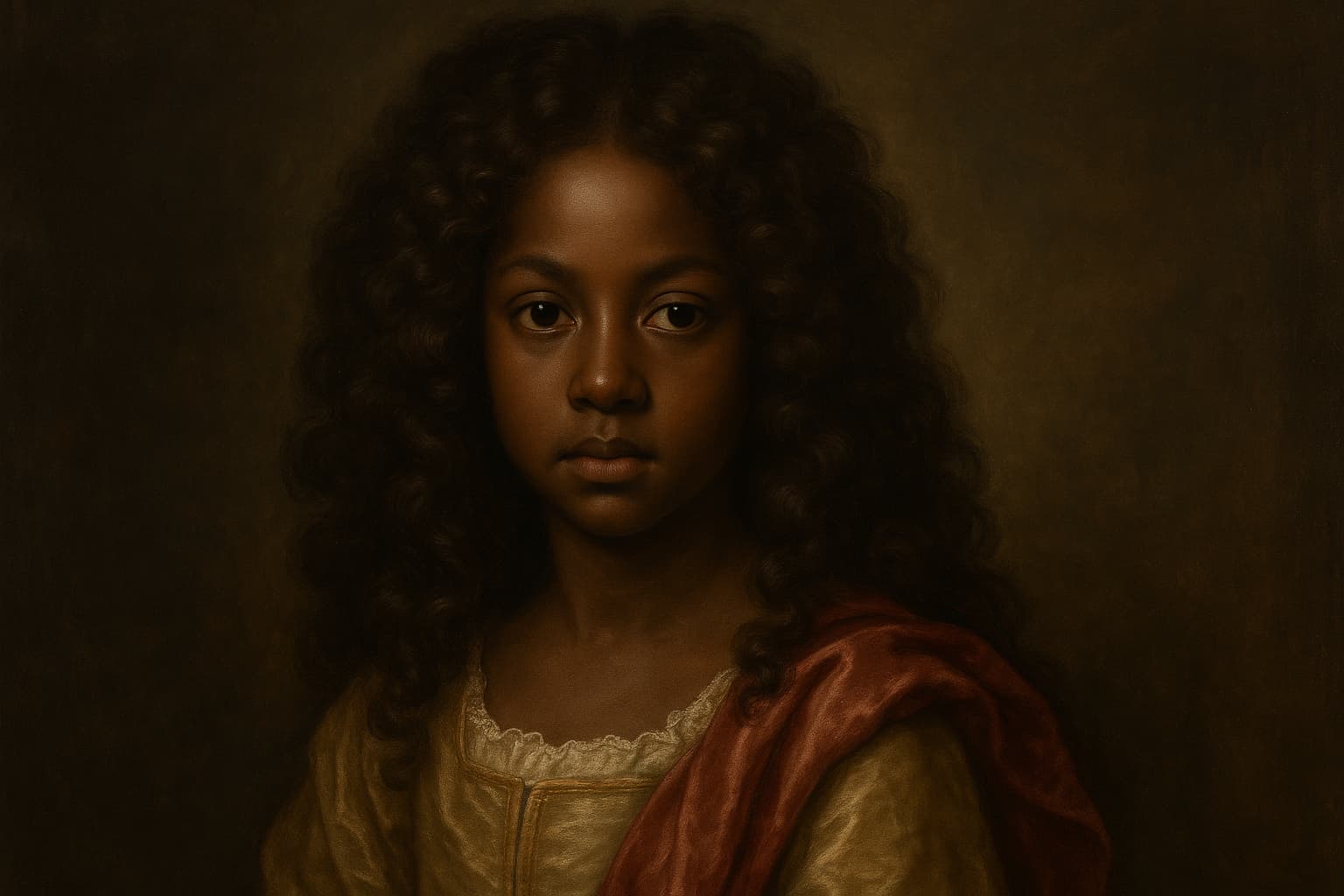
The story of Louise Marie-Thérèse, known as the Moorish Nun of Moret, remains one of the most unsettling mysteries of the French monarchy.
THE BIRTH THAT SHOCKED A KINGDOM: WHY A “BLACK PRINCESS” CAUSED PANIC AT COURT
Whispers behind closed doors. Ministers avoiding the queen’s gaze.
And in the middle — a newborn girl with dark skin.
In the 17th century, such a birth was more than curious—
it was dangerous for the Bourbon dynasty.
A medical anomaly… or a convenient excuse?
Melanism is rare, but if this were the explanation,
why erase all official documents?
A secret affair with a Black servant?
He disappeared the very day the child was born.
A political trap from Spain?
A mysterious letter hinted that the queen had been deceived.
And the timing aligned exactly with conception…
All paths point to one thing: France feared the truth.
WHY THE NAME “MOORISH NUN OF MORET”?
Her nickname reflected:
The convent became her haven — and her silence.
VOLTAIRE’S SHOCK, ROYAL SECRECY AND UNANSWERED QUESTIONS
Strange facts accumulate like pieces of a forbidden puzzle:
Voltaire claimed she resembled the king “exactly”
He saw her face to face — and was stunned.
The royal court pretended she never existed
No mention, no document, no acknowledgment.
Secret visits from Louis XIV’s most trusted valet
Bontemps traveled to see her twice, earning large sums.
Why would he visit a simple nun?
It all feels less like coincidence,
and more like a deliberate cover-up by the Sun King.
THE CLUES THAT SURVIVED: A PRINCESS ERASED FROM HISTORY
Scattered testimonies hint at uncomfortable truths:
Too many hints for a mere legend… don’t you think?
LIFE BEHIND THE CONVENT WALLS: THE WOMAN WHO NEVER ESCAPED HER SECRET
Louise remained in the convent for life.
No title.
No recognition.
No royal name.
Yet, royal officials kept visiting her discreetly.
That alone speaks volumes.
WHAT DO HISTORIANS SAY TODAY?
The scholarly world is divided.
Some argue she was simply a nun whose story grew with time.
Others insist she was the king’s hidden daughter, born from an African or mixed-heritage mother.
Historian Serge Aroles claims he has evidence —
and promises its publication soon.
If true, the monarchy tried very hard to bury her.
THE BIRTH THAT SHOCKED A KINGDOM: WHY A “BLACK PRINCESS” CAUSED PANIC AT COURT
Whispers behind closed doors. Ministers avoiding the queen’s gaze.
And in the middle — a newborn girl with dark skin.
In the 17th century, such a birth was more than curious—
it was dangerous for the Bourbon dynasty.
A medical anomaly… or a convenient excuse?
Melanism is rare, but if this were the explanation,
why erase all official documents?
A secret affair with a Black servant?
He disappeared the very day the child was born.
A political trap from Spain?
A mysterious letter hinted that the queen had been deceived.
And the timing aligned exactly with conception…
All paths point to one thing: France feared the truth.
WHY THE NAME “MOORISH NUN OF MORET”?
Her nickname reflected:
- her dark skin, described at the time as “Moorish”;
- the convent of Moret-sur-Loing, where she was hidden as a child.
The convent became her haven — and her silence.
VOLTAIRE’S SHOCK, ROYAL SECRECY AND UNANSWERED QUESTIONS
Strange facts accumulate like pieces of a forbidden puzzle:
Voltaire claimed she resembled the king “exactly”
He saw her face to face — and was stunned.
The royal court pretended she never existed
No mention, no document, no acknowledgment.
Secret visits from Louis XIV’s most trusted valet
Bontemps traveled to see her twice, earning large sums.
Why would he visit a simple nun?
It all feels less like coincidence,
and more like a deliberate cover-up by the Sun King.
THE CLUES THAT SURVIVED: A PRINCESS ERASED FROM HISTORY
Scattered testimonies hint at uncomfortable truths:
- a “slightly Moorish princess” who died in 1665;
- the sudden disappearance of the royal dwarf as rumors vanished;
- convent records suggesting that Louise held a special status.
Too many hints for a mere legend… don’t you think?
LIFE BEHIND THE CONVENT WALLS: THE WOMAN WHO NEVER ESCAPED HER SECRET
Louise remained in the convent for life.
No title.
No recognition.
No royal name.
Yet, royal officials kept visiting her discreetly.
That alone speaks volumes.
WHAT DO HISTORIANS SAY TODAY?
The scholarly world is divided.
Some argue she was simply a nun whose story grew with time.
Others insist she was the king’s hidden daughter, born from an African or mixed-heritage mother.
Historian Serge Aroles claims he has evidence —
and promises its publication soon.
If true, the monarchy tried very hard to bury her.