🏠 Real estate ranks second among the most popular investment options for the French, following the Livret A savings account, according to a study published in March 2023. However, like any other investment, it carries risks. Investing in the wrong property can lead to significant financial losses, so caution is necessary, especially when purchasing older apartments or houses. Although such properties are often priced 20% lower than new builds, investment specialists warn they may require substantial repairs, making them a poor investment, even if the purchase is intended for personal use.
🔍 HOW TO IDENTIFY MOISTURE ISSUES DURING A PROPERTY VIEWING
During a property viewing, pay attention to the condition of walls and ceilings to check for mold, look for condensation on windows, assess the condition of ventilation holes and baseboards. The Qualitel Association, which works to improve housing quality in France, also recommends seeking the help of a specialist from a thermal engineering office. For example, during a follow-up viewing, an expert can “identify the causes of moisture in the house and suggest ways to eliminate them.”
HOW A SMALL DEVICE CAN HELP AVOID HIDDEN ISSUES
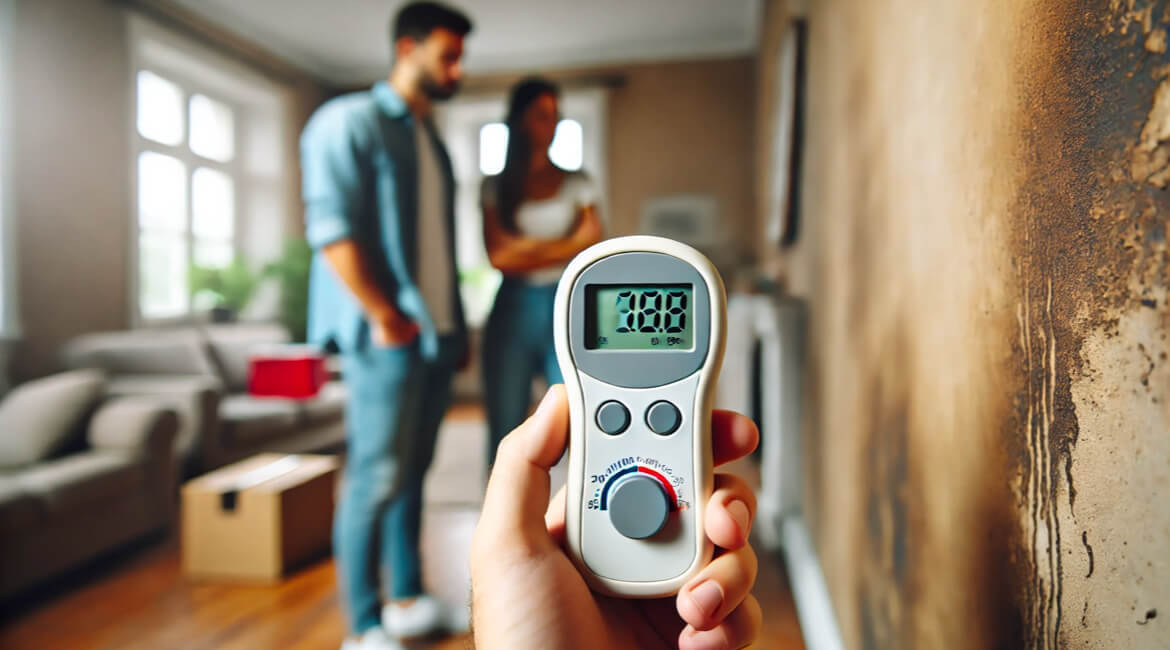
Potential buyers can prepare in advance and bring a small device to measure the moisture level in materials like walls. This device operates using the resistive method: it sends an electrical signal between two electrodes inserted into a porous material (such as plaster or wood) and measures electrical resistance. The higher the moisture content in the material, the better it conducts electricity. This device, called a moisture meter, is sold in most home improvement stores for around 20 euros. It can be used during a property viewing to detect leaks, water penetration, or poorly repaired flooding damage that may have been hidden by recent repairs (drywall, wallpaper, paint, etc.).
CHECKING AIR QUALITY WITH A HYGROMETER
For a more thorough check, a hygrometer can be purchased, which is also sold in home improvement stores starting at 20 euros. Unlike the moisture meter, this device measures the humidity level in the air, allowing an assessment of indoor air quality. According to the Qualitel Association, “the recommended humidity level for good air quality is between 40% and 60%.” It’s important to note that high humidity levels can trigger allergies, respiratory issues, and promote mold growth, while excessively low humidity can cause dryness in mucous membranes, sore throats, and itchy eyes.
📞 Contact me if you have a project related to buying or selling real estate.
🔍 HOW TO IDENTIFY MOISTURE ISSUES DURING A PROPERTY VIEWING
During a property viewing, pay attention to the condition of walls and ceilings to check for mold, look for condensation on windows, assess the condition of ventilation holes and baseboards. The Qualitel Association, which works to improve housing quality in France, also recommends seeking the help of a specialist from a thermal engineering office. For example, during a follow-up viewing, an expert can “identify the causes of moisture in the house and suggest ways to eliminate them.”
HOW A SMALL DEVICE CAN HELP AVOID HIDDEN ISSUES
Potential buyers can prepare in advance and bring a small device to measure the moisture level in materials like walls. This device operates using the resistive method: it sends an electrical signal between two electrodes inserted into a porous material (such as plaster or wood) and measures electrical resistance. The higher the moisture content in the material, the better it conducts electricity. This device, called a moisture meter, is sold in most home improvement stores for around 20 euros. It can be used during a property viewing to detect leaks, water penetration, or poorly repaired flooding damage that may have been hidden by recent repairs (drywall, wallpaper, paint, etc.).
CHECKING AIR QUALITY WITH A HYGROMETER
For a more thorough check, a hygrometer can be purchased, which is also sold in home improvement stores starting at 20 euros. Unlike the moisture meter, this device measures the humidity level in the air, allowing an assessment of indoor air quality. According to the Qualitel Association, “the recommended humidity level for good air quality is between 40% and 60%.” It’s important to note that high humidity levels can trigger allergies, respiratory issues, and promote mold growth, while excessively low humidity can cause dryness in mucous membranes, sore throats, and itchy eyes.
📞 Contact me if you have a project related to buying or selling real estate.