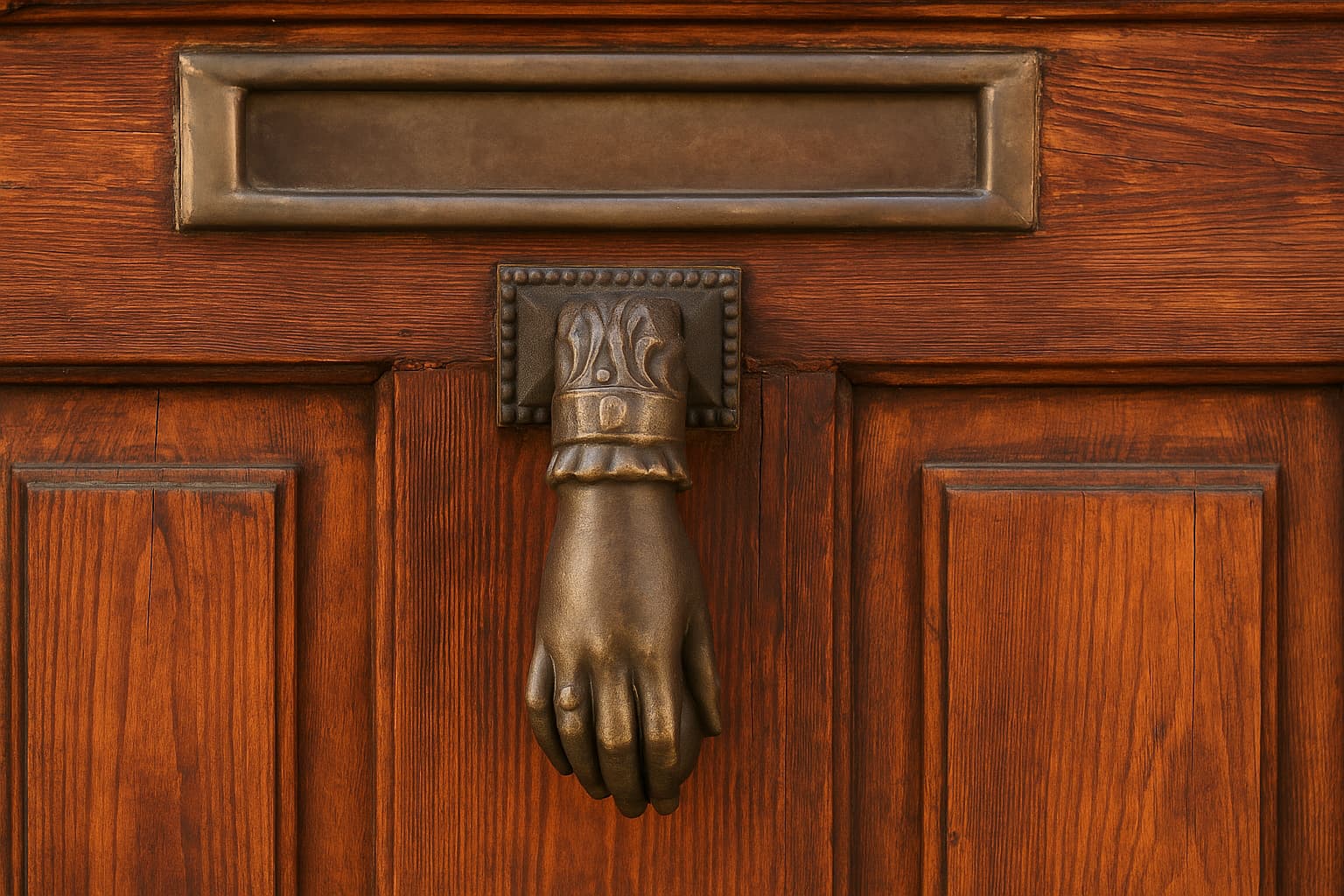
Have you ever spotted an antique door knocker shaped like a woman’s hand? It feels almost magical — as if it carries stories from centuries past. But what does this intriguing metal hand truly represent?
WHERE THE “HAND ON THE DOOR” ORIGINATED — AND WHY IT BECAME SO POPULAR
Attention hook: Imagine learning more about a household from a single metal gesture than from any sign or inscription.
These knockers appeared in North Africa and quickly spread throughout the Mediterranean. Many link them to the Hand of Fatima, a protective symbol of prosperity and feminine strength. In Europe, the refined metal hand became a sign of elegance, status, and hospitality.
WHY A WOMAN’S HAND? THE HIDDEN DESIGN MEANINGS
If you look closer, you’ll notice a ring, a decorated cuff, and the graceful pose — none of these elements were random.
They acted as cultural codes of their time:
— the ring symbolized feminine presence or guardianship;
— the cuff indicated social class or a specific community;
— the material of the knocker reflected the owner’s wealth or ambition.
WHAT YOU FEEL WHEN YOU LOOK AT THIS KNOCKER
Old objects work like time portals. Even with minimal context, our imagination instantly starts forming stories. This hand-shaped knocker becomes a symbol of mystery and quiet charisma.
WHY THESE KNOCKERS ARE MAKING A COMEBACK TODAY
In a world of repetitive, minimalistic designs, people crave character, symbolism, and history they can literally touch. A hand-shaped knocker turns a simple door into a statement piece.
LOOK AT THE DOOR HAND DIFFERENTLY: IT MAY SPEAK LOUDER THAN YOU THINK
Antique details don’t just decorate — they connect us with the people and stories of the past, offering meanings waiting to be rediscovered.
WHERE THE “HAND ON THE DOOR” ORIGINATED — AND WHY IT BECAME SO POPULAR
Attention hook: Imagine learning more about a household from a single metal gesture than from any sign or inscription.
These knockers appeared in North Africa and quickly spread throughout the Mediterranean. Many link them to the Hand of Fatima, a protective symbol of prosperity and feminine strength. In Europe, the refined metal hand became a sign of elegance, status, and hospitality.
WHY A WOMAN’S HAND? THE HIDDEN DESIGN MEANINGS
If you look closer, you’ll notice a ring, a decorated cuff, and the graceful pose — none of these elements were random.
They acted as cultural codes of their time:
— the ring symbolized feminine presence or guardianship;
— the cuff indicated social class or a specific community;
— the material of the knocker reflected the owner’s wealth or ambition.
WHAT YOU FEEL WHEN YOU LOOK AT THIS KNOCKER
Old objects work like time portals. Even with minimal context, our imagination instantly starts forming stories. This hand-shaped knocker becomes a symbol of mystery and quiet charisma.
WHY THESE KNOCKERS ARE MAKING A COMEBACK TODAY
In a world of repetitive, minimalistic designs, people crave character, symbolism, and history they can literally touch. A hand-shaped knocker turns a simple door into a statement piece.
LOOK AT THE DOOR HAND DIFFERENTLY: IT MAY SPEAK LOUDER THAN YOU THINK
Antique details don’t just decorate — they connect us with the people and stories of the past, offering meanings waiting to be rediscovered.